A coastal landscape installation that looks flawless on day one often begins failing chemically before the contractor drives away. Standard material ratings assume inland conditions. They ignore the specific processes of salt air degradation that destroy hardscape fixtures, dissolve stone, and swell decking boards along the Florida coast. Specifying materials based on generic “coastal-rated” labels rather than precise chemical resistance leads to premature replacement costs that compound every season. Buying what the catalog calls marine-grade seems like the obvious answer. A more precise approach requires understanding how chloride ions penetrate oxide layers and how humidity keeps those ions active, then selecting substitutions that outlast marketing claims.
Contents
- How does salt air chemically degrade outdoor landscape materials in Florida?
- Which metal hardscape fixtures corrode fastest in Florida coastal zones?
- Do natural stone and concrete pavers withstand Florida salt air exposure?
- Which composite and synthetic decking materials resist salt air in Florida?
Key takeaways
- Salt air accelerates material degradation through chloride ion penetration, which breaks down protective oxide layers on metals, dissolves calcium carbonate in natural stone, and draws moisture into porous substrates.
- Carbon steel and standard aluminum alloys corrode rapidly in Florida coastal environments because of continuous chloride exposure.
- Natural stones vary widely in salt tolerance.
- High-density polyethylene (HDPE) and capped composite decking resist salt air degradation better than uncapped wood-plastic composites or PVC boards containing calcium carbonate fillers.
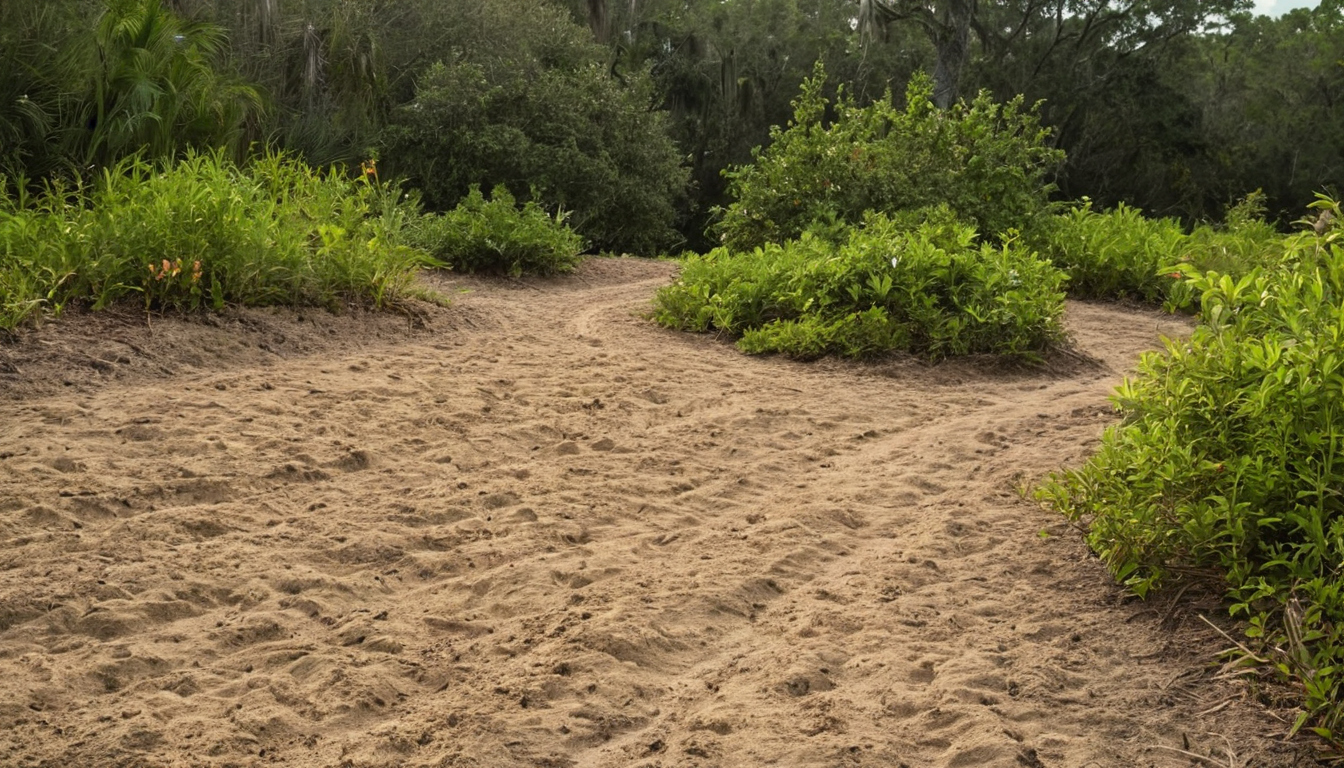
How Salt Air Degrades Florida Landscape Materials and What Lasts Longer.
How does salt air chemically degrade outdoor landscape materials in Florida?
Salt air accelerates material degradation through chloride ion penetration, which breaks down protective oxide layers on metals, dissolves calcium carbonate in natural stone, and draws moisture into porous substrates. In Florida coastal zones, high humidity and UV exposure compound these reactions, significantly shortening material lifespans compared to inland installations.
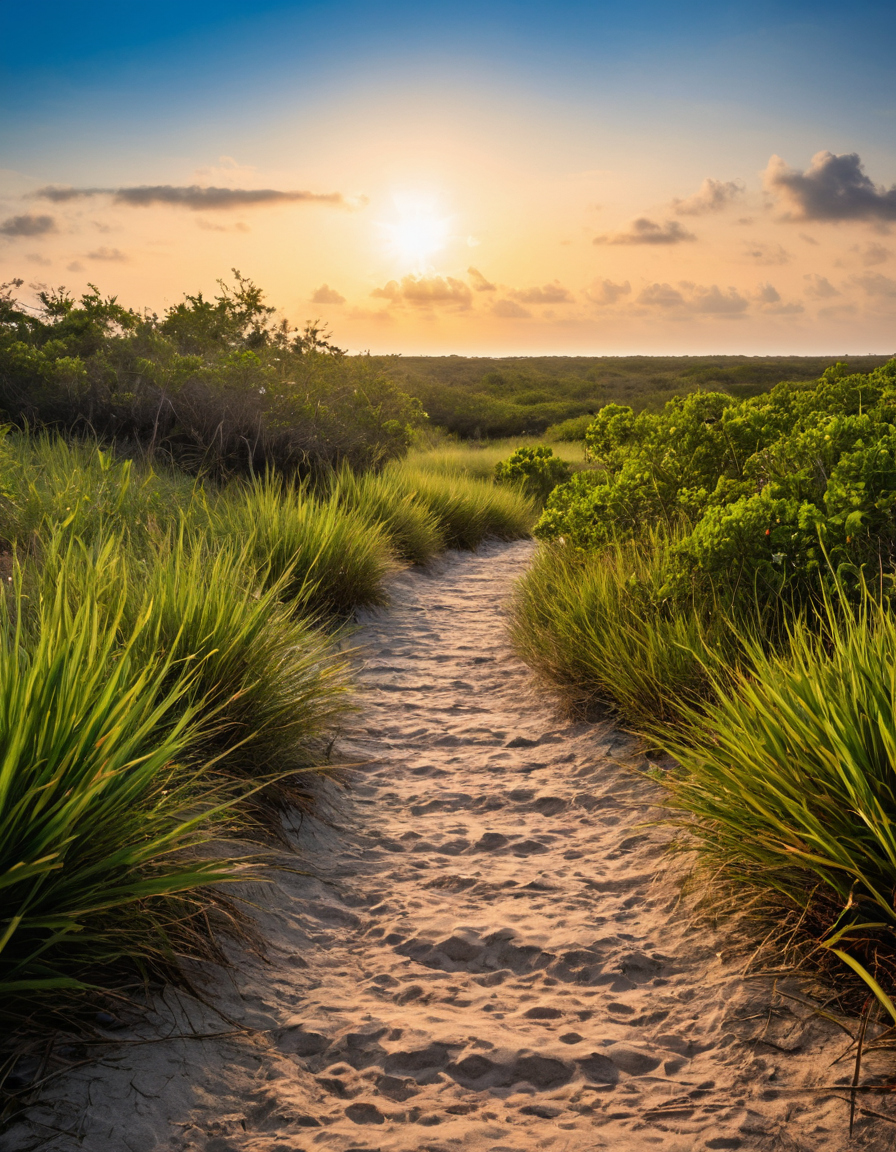
How does salt air chemically degrade outdoor landscape materials in Florida.
Chloride ions drive the destruction. Sodium chloride particles suspended in ocean breezes settle on hardscape surfaces and begin moving into microscopic pores. On ferrous metals like carbon steel or standard iron railings, chloride ions penetrate the passive oxide film that normally shields the base metal from oxygen. Once that film is breached, the underlying iron oxidizes rapidly, expanding in volume and flaking away as rust. Non-ferrous metals such as aluminum form their own protective aluminum oxide layer, but sustained chloride buildup pits that surface over time. The damage compounds because each corrosion cycle exposes fresh substrate to the next wave of airborne salt.
Natural limestone and travertine react differently but suffer just as visibly. Calcium carbonate, the primary mineral in these stones, dissolves when exposed to slightly acidic salt solutions. Wind-driven salt spray lowers the stone’s surface pH, etching polished finishes and weakening the crystalline structure beneath. Dense igneous rocks like granite resist this chemical dissolution far better than sedimentary options, yet even granite joints and mortar beds remain vulnerable to chloride intrusion.
Protective coatings applied to these materials break down faster outdoors. The U.S. Environmental Protection Agency identifies paints, varnishes, waxes, cleaning products, building materials, and furnishings as common indoor sources of volatile organic compounds (U.S. Environmental Protection Agency). Salt crystals trapped beneath a failing varnish or wax layer create osmotic pressure that blisters the finish, exposing the wood or composite substrate directly to moisture. When applying replacement sealants or solvent-based coatings to exterior structures, the U.S. Environmental Protection Agency recommends increasing ventilation during product use to manage emissions safely (U.S. Environmental Protection Agency).
Saltwater flooding saturates a material’s entire structural cross-section. Storm surge or tidal inundation forces saline water deep into concrete pores, unsealed pavers, and soil profiles. This saturation triggers internal expansion when dissolved salts crystallize inside the matrix during dry periods. Concrete spalls from the inside out. Pavers split along bedding lines. Soil salinity spikes, killing root systems long after floodwaters recede. Spray demands better surface protection; flooding requires drainage engineering and material substitution at the foundation level.
The U.S. Environmental Protection Agency guide to mold and moisture states that condensation and wet or damp spots should be fixed promptly to prevent mold growth (U.S. Environmental Protection Agency). Moisture retained on shaded landscape walls or under dense canopy cover creates ideal conditions for biological growth alongside chemical decay, adding to property owners’ maintenance burdens.
UV radiation degrades the polymer binders in composite decking, powder coatings, and exterior sealants. As ultraviolet light breaks molecular chains in these protective barriers, the coatings become brittle and develop micro-cracks. Chloride-laden moisture then seeps through these UV-induced fractures, reaching the substrate much faster than it would through an intact film. Standard material ratings tested in arid or temperate climates fail to account for this combined UV and moisture damage.
Maintenance practices must adapt to these combined stressors. The Natural Stone Institute recommends cleaning natural stone surfaces with neutral cleaners, stone soap, or mild liquid dishwashing detergent and warm water to remove salt deposits without altering the stone chemistry (Natural Stone Institute). Aggressive cleaning worsens the problem. The Natural Stone Institute warns that scouring powders or creams can scratch natural stone surfaces because those products contain abrasives (Natural Stone Institute). Scratched surfaces give salt crystals more places to anchor and retain more moisture.
These chemical and environmental processes explain why generic coastal labels often mislead buyers. Materials must be selected for specific failure modes rather than marketing categories. Metals are the most visible casualties of this oversight, raising a practical question: which metal hardscape fixtures corrode fastest in Florida coastal zones?
Which metal hardscape fixtures corrode fastest in Florida coastal zones?
Carbon steel and standard aluminum alloys corrode rapidly in Florida coastal environments because of continuous chloride exposure. Uncoated carbon steel shows visible rust within months, while standard aluminum develops pitting. Stainless steel grades 316 and marine-grade aluminum 5052 offer substantially better resistance but still require regular freshwater rinsing near the ocean.
Specifying metals for a coastal landscape demands a checklist, not a quick look through a catalog. Standard ASTM B117 salt spray tests measure performance in sealed laboratory chambers. Those conditions ignore the wind-driven salt deposition, thermal cycling, and sustained humidity that define Florida coastlines. A fixture that passes a thousand hours in a lab chamber often fails far sooner on a Naples patio. Use this decision checklist before approving any metal hardscape element:
Florida Building Code requirements for coastal high-hazard areas restrict fastener materials for structural connections. Exterior hardware in these zones must resist salt-driven degradation to maintain structural integrity during storms. Choosing 304 stainless steel for light fixtures or railing brackets outside the strict structural scope remains a financial risk. Surface rust appears quickly on 304 fixtures installed along the coast. That staining signals active pitting beneath the surface. Repeatedly replacing corroded hardware costs more than specifying 316 initially.
Powder coating resists salt spray effectively until scratched. A single deep scratch exposes bare metal, allowing subsurface corrosion to spread beneath the intact coating. Anodized aluminum handles minor abrasions better because the protective layer integrates with the base metal. But standard anodizing thickness offers limited protection in aggressive marine atmospheres. Heavy-build anodizing comes closer to powder coating in durability.
Maintenance intervals determine actual lifespan. Coated aluminum furniture on a Florida pool deck requires frequent freshwater rinsing to remove salt deposits. Leaving salt residue on any finish accelerates breakdown. Homeowners who treat coated aluminum as maintenance-free face premature replacement costs. Buying furniture labeled rust-proof seems like the obvious answer. A more precise approach requires verifying the specific alloy and finish type, then committing to a rinsing schedule. Metal selection determines how long fixtures survive, but the porous paving beneath them faces entirely different chemical threats. Do natural stone and concrete pavers withstand Florida salt air exposure?
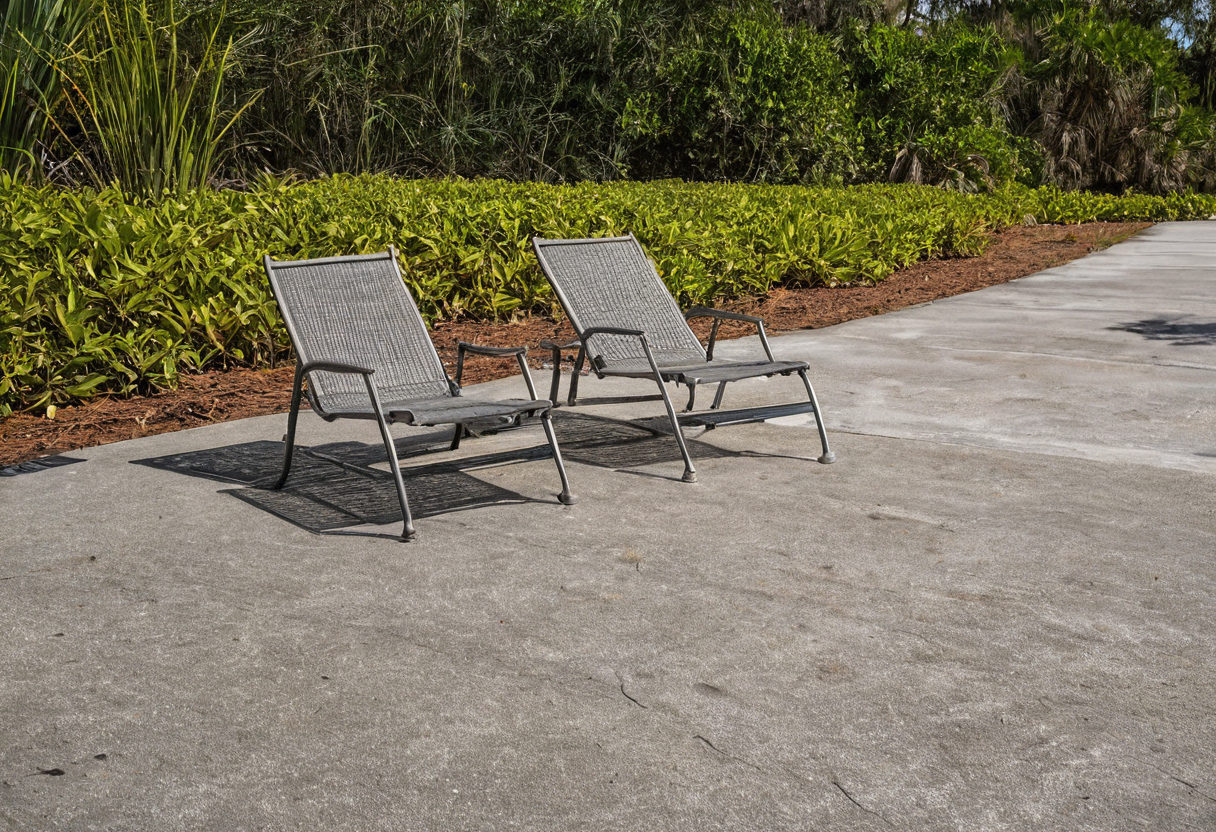
Which metal hardscape fixtures corrode fastest in Florida coastal zones.
Do natural stone and concrete pavers withstand Florida salt air exposure?
Natural stones vary widely in salt tolerance. Dense granite resists salt air well, while porous limestone and sandstone deteriorate quickly through salt crystallization. Concrete pavers develop efflorescence and surface spalling when exposed to continuous salt spray. Sealing reduces moisture penetration but requires regular reapplication under harsh Florida coastal conditions.
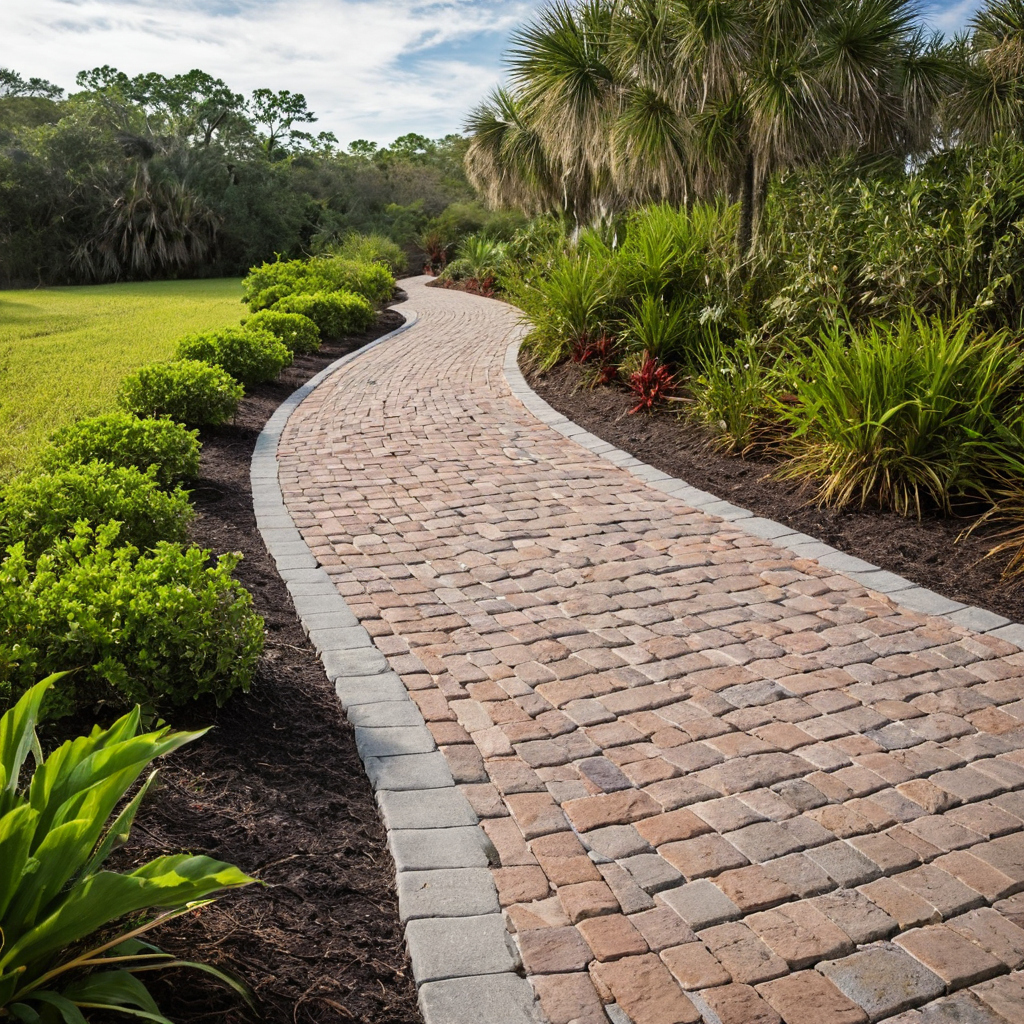
Do natural stone and concrete pavers withstand Florida salt air exposure.
Granite absorbs very little water by weight, keeping dissolved sodium chloride from penetrating the matrix. Travertine and limestone absorb significantly more moisture. Salt spray deposits sodium chloride into those open pores. Evaporation leaves crystals behind, and their growth exerts pressure against pore walls. Repeated wetting and drying cycles fracture the stone from the inside out. Limestone also contains calcium carbonate, which reacts with acidic components in marine aerosols. This reaction dissolves the binder holding the stone together. Sandstone fails faster than limestone because its silica grains rely on weaker calcite or clay cement that salt water washes away.
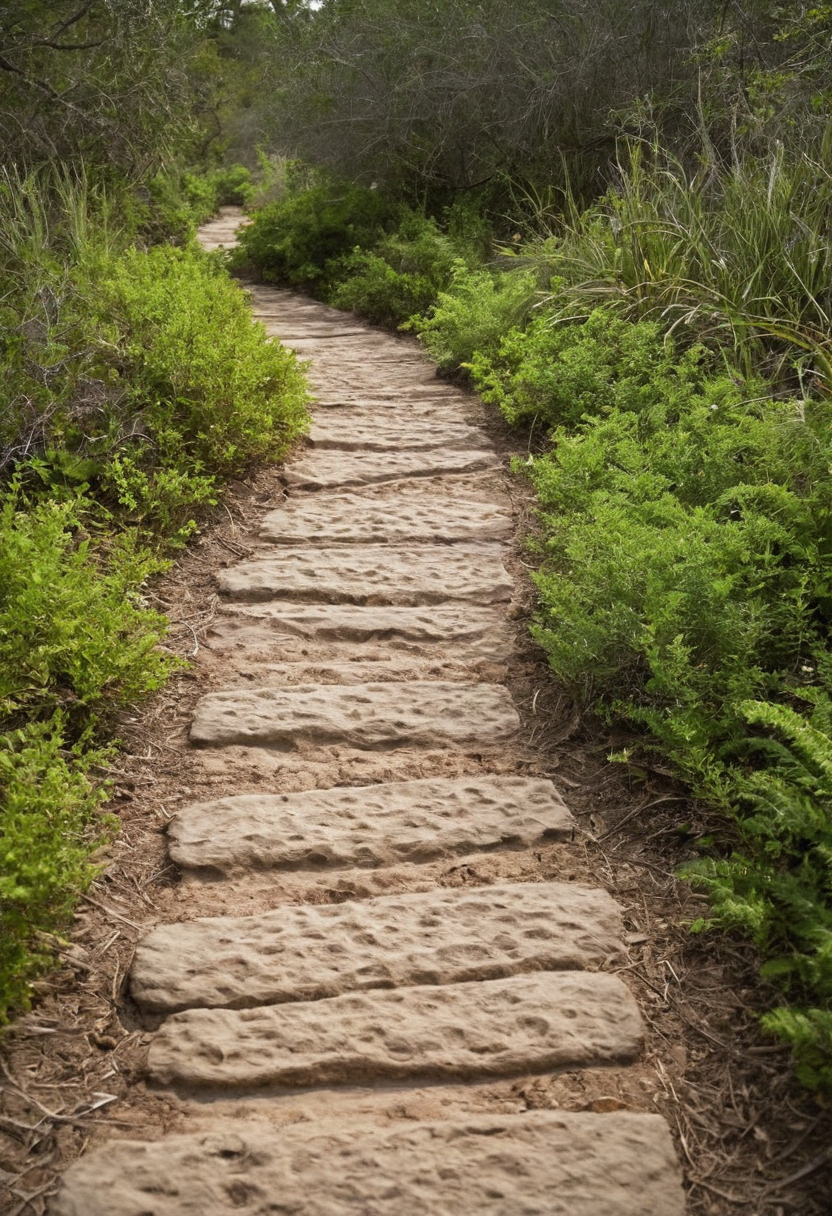
Granite absorbs very little water by weight, keeping dissolved sodium chloride from penetrating the matrix.
Acidic or alkaline cleaners accelerate chemical weathering in calcium-rich stones already stressed by salt deposition. Scouring powders or creams scratch the surface, opening new pathways for salt intrusion. Maintenance must rely solely on the neutral pH approaches established for these materials.
Portland cement concrete pavers fail through a different mechanism. Sodium chloride penetrates the capillary network of cured cement paste. Chloride ions react with calcium hydroxide and tricalcium aluminate in the cement. These reactions produce expansive compounds like Friedel’s salt, whose expansion cracks the paste. At the same time, soluble salts move to the surface as moisture evaporates. White efflorescence stains appear first. Subsurface crystallization follows, lifting thin layers of the concrete face. This spalling exposes aggregate and structurally weakens the paver. Standard inland concrete mixes lack the density required to resist this cycle near the ocean.
Penetrating sealers slow moisture penetration by lining pore walls without forming a surface film. Silane and siloxane treatments repel liquid water while allowing vapor to pass through. UV radiation degrades these chemical bonds over time. Salt spray abrades the treated surface during windy conditions. A sealer applied to a coastal patio loses effectiveness far sooner than the same product on an inland driveway. Maintenance schedules must account for this faster breakdown. Skipping resealing invites rapid deterioration once the barrier fails.
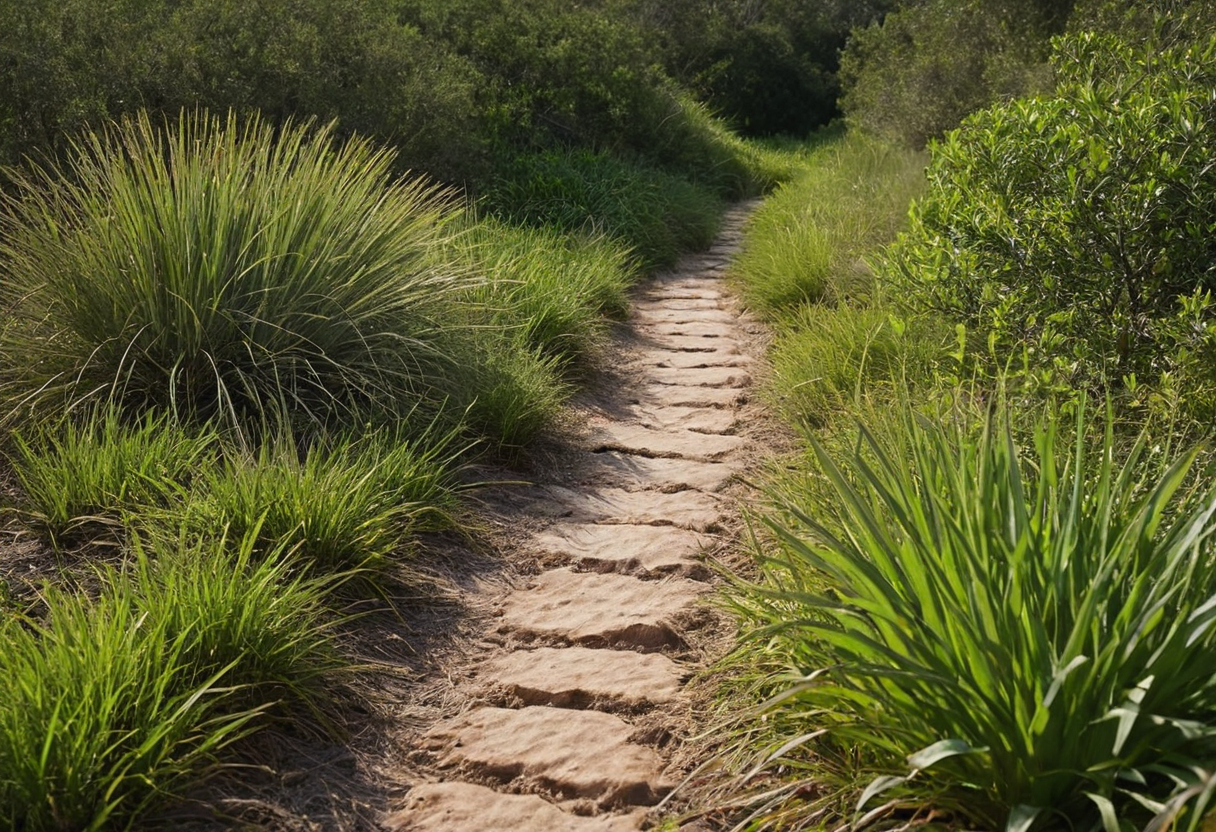
Penetrating sealers slow moisture penetration by lining pore walls without forming a surface film.
Specifying dense granite or high-performance concrete with low permeability avoids the replacement cycle entirely. But hardscape pavers are only one failure point. Elevated surfaces face the same chemistry. Which composite and synthetic decking materials resist salt air in Florida?
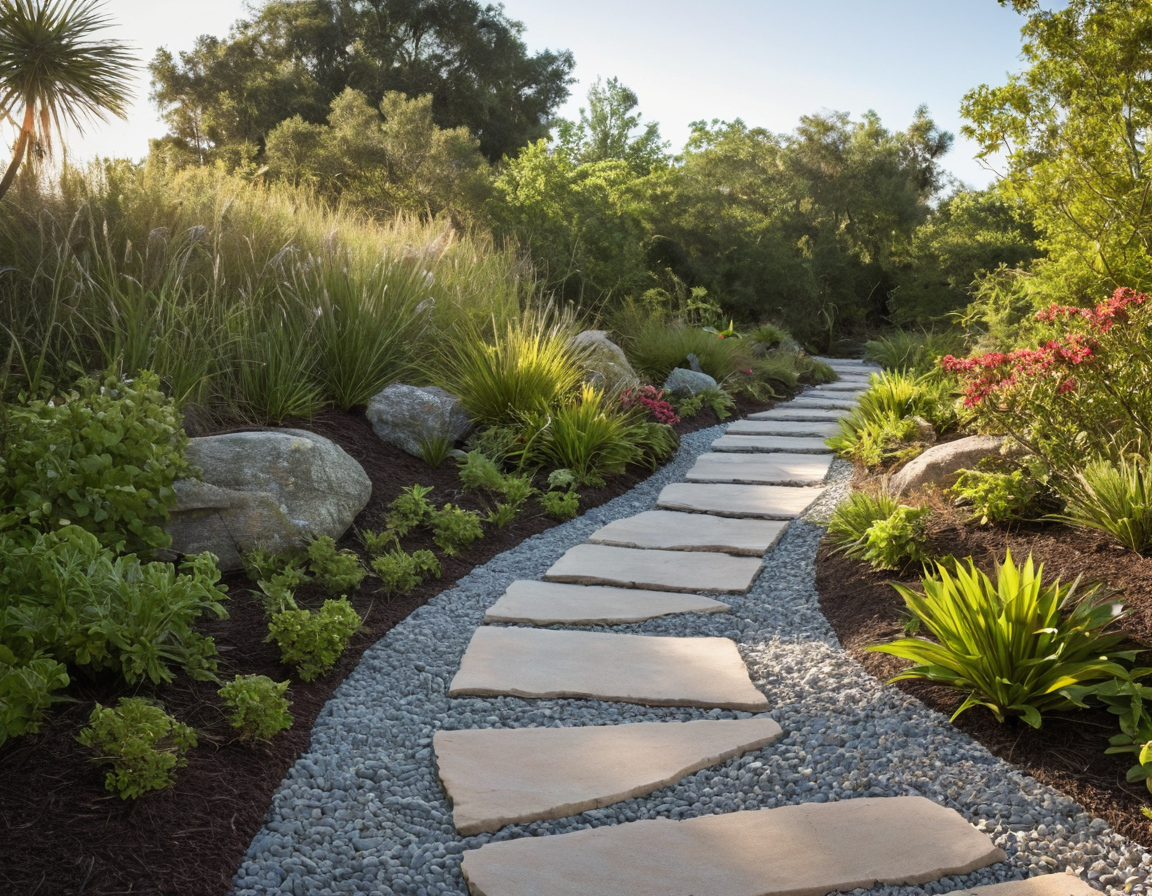
Specifying dense granite or high-performance concrete with low permeability avoids the replacement cycle entirely.
Which composite and synthetic decking materials resist salt air in Florida?
High-density polyethylene (HDPE) and capped composite decking resist salt air degradation better than uncapped wood-plastic composites or PVC boards containing calcium carbonate fillers. Uncapped composites absorb salt moisture, causing swelling and mold growth. For Florida coastal homes, fully capped boards with UV stabilizers provide the longest service life without structural warping or surface chalking.
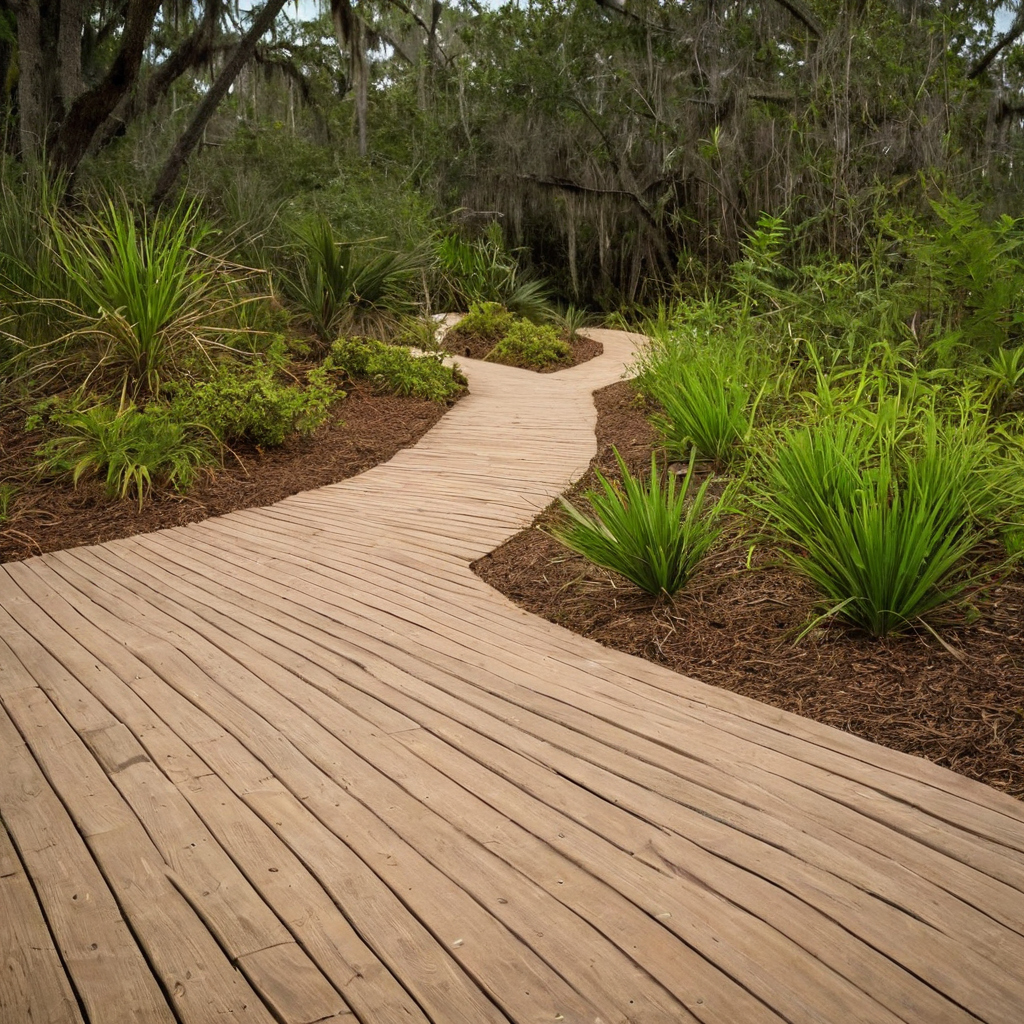
Which composite and synthetic decking materials resist salt air in Florida.
Standard material ratings fail here because generic coastal labels ignore how sodium chloride attacks specific polymer matrices. Any plastic might seem to outlast wood near the ocean. More precisely, only certain plastics survive when airborne salt penetrates microscopic gaps between polymer chains. Uncapped wood-plastic composites contain organic flour that absorbs moisture. Once salt-laden humidity enters those fibers, the board swells from the inside. Trapped moisture permanently damages the core, making prompt drying impossible once saturation occurs.
Fully capped HDPE boards seal the wood-flour core behind a dense polymer shell. Salt spray lands on the cap rather than soaking into the substrate. Manufacturers of marine-grade composite decking often restrict warranties for installations within specific distances of the ocean, acknowledging that direct salt exposure accelerates wear beyond standard testing parameters. Specifying a board without reading those warranty exclusions means paying premium prices for coverage that disappears as soon as installation begins near the water.
For more on this topic, see other guides on this site.
